Saturday, 17 August 2013

Meeting with Ian Jervis: COLOUR

  • Telling a story - Focus on a rich topic of interest
  • Effect on the brain: Visual process + focal point of retina, psychology of colour, colour = litterally the center of our point of focus
Colour in the Everyday:
  • Don't often notice it when it is dispersed throughout the world / in daily life - splashed around like little trinkets of colour catching your eye eg. to buy things in shops.
  • Helps us identify things in life - brand colours
  • Natural world - reproduction (eg. flowers), territorial display, warning signs - danger.

  • Historical conventions: In our memory to respond to these colours the way we do:
  • eg red - avoid, danger/hazard, green - go, safe
  • The idea of memory recognition may help when considering what colour choices to make for my works.
  • We see colour before we see tone.
  • Shadow helps us identify form

  • Could colour break away from/ out of utility? (utility - usefulness, value, effectivness)
  • Colour has the ability to liberate - liberation form utility
  • Excess - like icing on the cake
  • Like the mass of everyday materials I am using in my work, colour can work in the same way when presented in excess it has the ability to be effective/high impact and get noticed by the viewer.

Colour: High energy
  • Saturates the brain when faced with excess colour.
  • Stops us form thinking
  • Power of colour - worthy to play with beacuse it is liberating.
  • Colour avoids a direct narrative - more about SENSATION
  • tonal work speaks more of narrative
  • Excess + Endulgence
  • Power + control
  • Change and Exploration
  • Decoration + excess
  • Colour - lively, excitement or boredom, excess/ overload etc
  • Choose one aspect and write a story - lead with one idea - the power of colour in excess
  • Excess : how to talk about it.....
  • Think about my work and make notes while lookign at it - why the work is interesting and its effect on me/ what am I trying to do in terms of sensation and impact?
  • This will in turn effect how I go about making future works and how I think about my approach to materials and colour choices....I will understand what to do next.
  • Dealing with the work on its own terms

  • Breaking away from utility...
  • disrupting, fun, change, randomness, surprises, questions, disturbing...
  • Looking at designers who have pushed the boundaries of what is acceptable/ normal...
  • Messing with/ fucking up beauty..: their work may be stiking, offensive, violent etc...
  • Throwing people out of complaicency
  • Stepping away from order and chaos ( may also look at the effect of this) and working more with confusing and disrupting the viewer - stressful, chaotic, disrupted
  • Colour has the power to disrupt order rhythm and systems: Can work with visual effect of decoration but use colour to make subtle/ abrupt disruptions
  • Causing nausea, unable to settle, shifting, movement - Excess of sensation through colour and movement.
  • Adolf Loos - "Decoration is a crime" eg. decorative furniture pieces ontop of the towns buildings - pointless, pointing fun at this idea, joke.

Decorative:
  • Suggests sensations/ atmosphere - harmony, dissonance (discord, conflict.....syn. harmony) - gives adreniline which is addictive.
  • Ties in with rhythm and colour - predictability - colour can mess this up.
  • Achromatic: competing with colour - irritation, interesting, method - decoration, rhythm, repetition.
  • Throwing these patterns, rhythms and systems out of wack - aesthetic becomes anaethetic..
  • Kitsch: two refusals t bring in oppotion
  • Compared to normal which is good taste - socio economic status (aesthetics, subtlty..)

Judy Darrough
  • Shows at 'Two Rooms Gallery."
  • Queen of Kitsch - dissonance
  • Looking at the aesthetics of what other people deal with in the everyday - buying for the use of the object/item rather than its colour
  • Darrough works with this idea and gets the viewer to reconsider these aesthetics - putting random things/ colours together creating humour, surprise, change and excitement.


Wednesday, 7 August 2013

Meeting with Mon J:

  • Be more sensitive to the materials  - Sticking to the ones I have already been workign with, pushing my relationship with these materials (wool, beads), to really explore and understand their material qualities.
  • How can masses of found beads and wool be used?
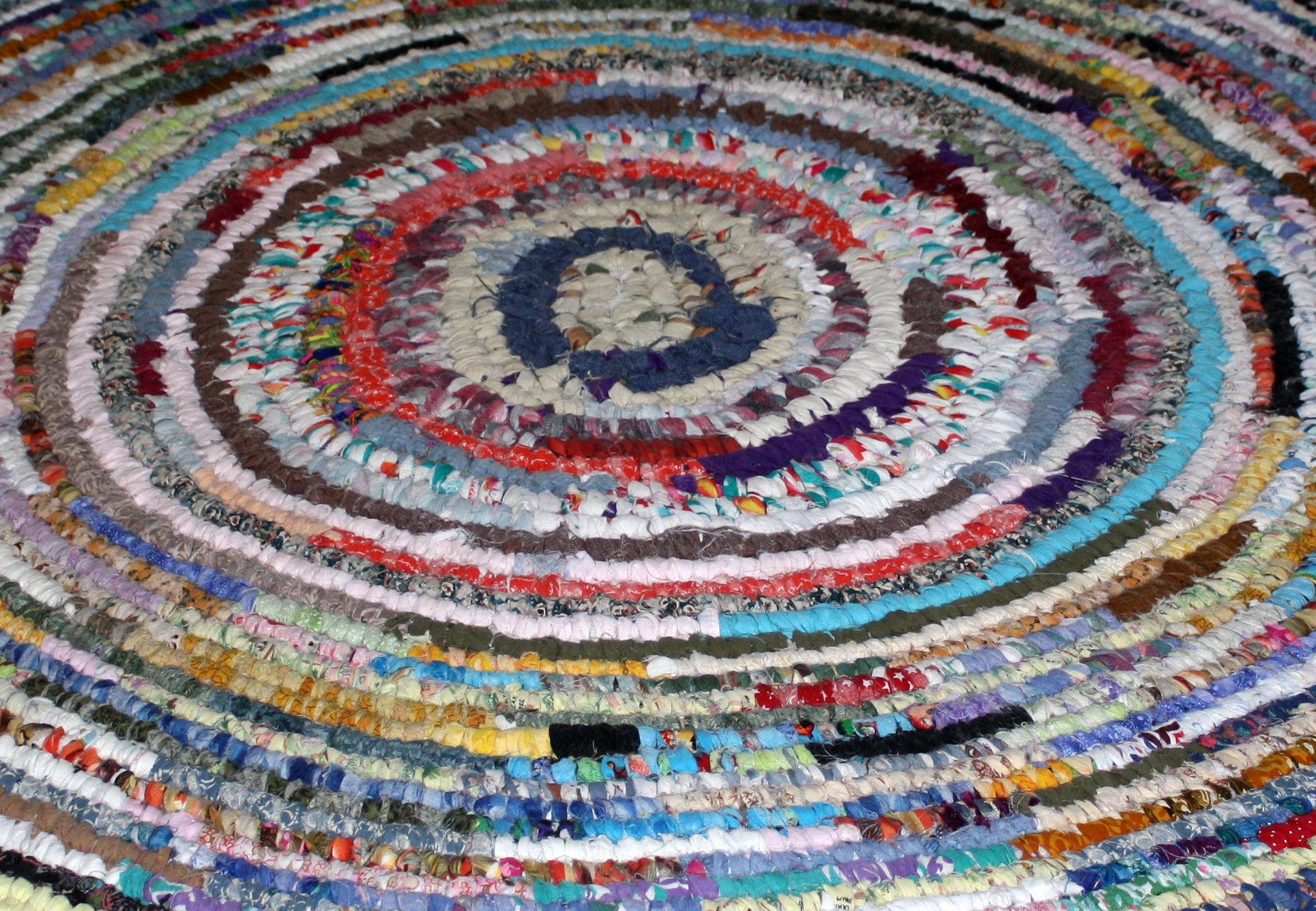
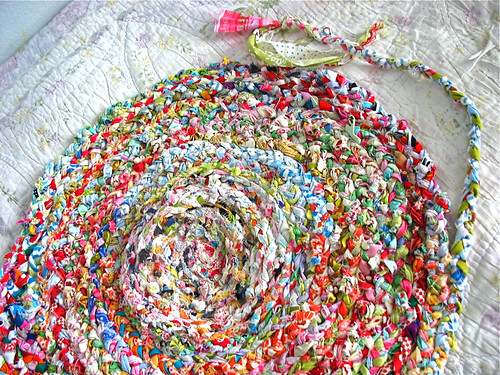
  • Wound together, platted (rag rugs), coiled
  • look at colour relationships


  • Need to focus more on refining my works/ developing a stronger understanding of what that materials I have chosen can do.
  • The different qualities of the wool (fluffy, thick, thin, stiff floppy), beads (size, shape, beads or buttons?)
  • Considering different constructions - using thin wire, string, nailing them to the wall, glue...
  • Space: on the wall, on a surface, on the floor...
  • working in the centre of a space rather than responding to the corner of a wall...looks more at materials qualities and what I have opened up about that material.
  • Need to make make MAKE!!!!

COLOUR!!
  • Distinct colour choices - order, pattern, combinations, repetition.
  • Go with the flow of these patterns - see how the work develops over time and the choices that I make as the work progresses.
  • TALK TO IAN JERVIS!

BOOKS:
Colour
  • White Chapel Series - there is one on colour, painitng...etc.
  • My old colour articles....
Line
  • "Singular Lines Sometimes Repeated"
  • "Infinite Line"
Labour
  • "Work Ethic" (catalogue) - If I cannot find it Mon has a copy

 Look at my old documents, books, articles of choice...

Artists:
  • Nike Sivalis - cotton wool balls - sequence, repetition
  • David Sequiera - uses everyday materials
 
 
http://www.iconophilia.net/in-the-air/ - lookign up close at some colour works made with plates and trays.
 
 
David Sequeira (1966-) Zen Picnic (1998-2006) (Collection of the artist)
 
Look at groups of articles on artists Germaine Koh (Knit work) and Tiffany Singh


Notes from my meeting with Tri Scott:

  • When choosing materials to work with often the most interesting relationships you can make are with materials are ones where you don't fully trust that material....
  • Makes you feel uncomfortable
  • Easy/difficult to express these feelings
  • Being a function with a material
  • LOVE is very important when dealing with a specific material - you get closer to it, expressed through you choice of gesture/interaction, bodily experience.
  • A successful work is one where the viewer can respond to the love and attention you have payed to this particular material, and a work that you yourself are proud of.
  • We choose ceratin materials to work with becasue we cannot resist them.
  • It is a personal/physical choice and we need to allow our mind to go for the ride.
  • RHYTHM: these works can become musical and rhythmic through the fluid interaction and repetition of gesture.
  • You start to understand the material with your body and mind.
  • In a physical and spatial way.
  • Realise simple things eg. Gravity - the physical world.
  • When DOING you gain more of an appreciation for that material.
  • Forming connections/ making sense of something/ feeling your way into the relationship.
  • You learn to understand somthing really simple in a more profound way.
  • Grasped something, and it becomes a part of you to understand that.
  • The drawing process: Touching on things without pinning them down.
Serindipity (feeling sensation, magical, an aptitude for making desirable discoveries by accident, the faculty of making fortunate discoveries by accident)
  • Looking for little things that strike me.
  • Possibility of moments
  • Looking for things that jump out at me - Litterally light up in my eyes.
  • Looking at it and knowing an characterisitic of that material, something you can do with it.

  • Putting these feelings into words is difficult.
  • You can see them inside oyurself
  • Just like memories from the past these relationships (bodily) are similar, they are embedded in you
  • Memories/ decisions come out of your body, they come out in a different physical form.
  • These material relationships/ interactions are an interesting way of knowing.
  • You can set aside the knowing of you ind and a different space opens upwhich is more inarticulate/ more bodily/ clearer to you on a physical, more personal level.
  • Understanding something about something
  • It becomes tangible - you gain a deep knowing.
  • Have CONFIDENCE
  • The world - Every molecule has a vital energetic place: we are these molecules so we need to change and gropw and do our own thing.
Further decelopments/ things to do...
  • Finding more poetic writings - simple but meaningfuland captures ideas in a cocise way.
  • Collecting phrases/ Pinterest (notes and images) - Gain more experience of these found images and phrases by making work that incorporates/ responds to them..
  • Try works I do in relationship to space and dwellings
  • Pay more attention to the space I am working in, thinking about corners, cupboards or even excluding things (on purpose).
  • BOOKS: The Man Who Tasted Shapes"......."The Poetics of Space," by Gaston Bachelard.
  • Louise Bourgeois

Monday, 29 July 2013

Leila Heller Gallery presents ‘Transition,
an exhibition by Ran Hwang from Apr. 5- Apr. 27

http://artofthemideast.com/2012/04/03/leila-heller-gallery-presents-transition-an-exhibition-by-ran-hwang-from-apr-5-apr-27/

"Transition will feature eight works made of buttons, beads, crystals, thread, and pins, and will also include a video installation."
"Using common, mass-produced fashion materials, Hwang creates striking works of art that transform and re-contextualize these everyday objects."
"Hwang contrasts the figure’s solid form with a spattering of buttons and beads that fall from the edge of the work into the negative space that surrounds it. This notion of the artwork’s deterioration is common practice in Hwang’s repertoire as she reminds the viewer of the dichotomy of permanence and impermanence, and ultimately the transience of life."

"In the catalogue essay, Barbara Pollack writes: “On one hand, it is an overtly labor-intensive mode of art-making, to the point that thinking about the sheer effort can distract from appreciation of the work. But, for the artist, the task of mounting buttons upon buttons, one pin at a time, parallels a Buddhist monk’s practice of staring at a blank wall for months on end as a path to enlightenment. Her art-making is entirely meditative for Hwang, and she hopes that viewers can share the meditative state evoked by her strongest work.”"


Monday, 22 July 2013

Annotated Bibliography:

Pick texts that are shorter and condensed – to the point and there is a definite idea or key aspect of the text that links to me work
Find texts that push beyond what I already know about my art practice  - stretch my ideas and stretch my practice into different areas – like a drop into a pond the rings are the important part – they stem from the original idea/ideas/central basis of my practice and explore different ideas, bouncing off new ideas and coming back.
Can start by making simply writing what I feel, then I will be able to reconsider my first response and build on it. I can modify the writing and focus more on the articulation of my response.

Key words:
·         Transcendence (Web definition: a state of being or existing above and beyond the limits of material experience wordnetweb.princeton.edu/perl/webwn)
·         Transition – the in between stage, personal alteration – may understand change or my be intuitive – and later be able to reflect on  work and draw on new ideas that I can see in it after careful reconsideration and further exploration of ideas and experimentation.
·         The Everyday
·         Fragility/temporality
·         Intensity – in terms of installation  - looking at the accumulation of materials and their ability as a collective to push the viewer’s thoughts beyond their original state – whether the materials have been slightly altered by me or just the way they have been constructed and the multiplicity of materials effects how the viewer sees them, and understands ideas beyond. Intensity also talks a lot about time, labour and commitment of the artist.
·         Time – growth, development, unfolding off the work (often have a general idea of what I want to do but the final product cannot be predicted and will unfold over time.)
·         Gesture – choosing a gesture/ method/ technique to go with the materials I have chosen (or choosing a method then materials) is one aspect of my art practice that I can make a definite decision on right from the start and allows me to make these laborious works. Once I have decided on the particular gesture it is easier for me in my practice to then focus on other factors such as time, labour, intensity, control(to a certain extent), chance, intuition.
·         Repetition
·         Material potential
·         Displacement of materials
·         Craft – making a work look good, and evidence of the hand – labour, craft, intensity
·         Innovation – something new or different introduced, new things or methods.
·         Familiar and unfamiliar

Extra notes from midyr review:


  • Be aware of small transformations and simple manipulations in your work so you can respond to them effectively.
  • An increased awarness of the role 'gesture' plays in the work would be good.
  • The idea of rehabilitating objects - you are taking away objectness from an object by the deconstruction process but through making, giving it back.
  • The relevance of craft for it's craftiness - hand having visible presence.
  • Time, action, labour = value.
  • Thinking about the truth to materials' strategy.......considering both the gesture and materials together to create a work where they work together in harmony and play off each other. 
  • Getting a work to go beyond itself and not just end up looking like samples.
  • Utilising visual conventions - material transformation, lightness of touch, duration, repetition, arrangement (beauty).


·        

Sunday, 7 July 2013

Contextual statement draft

First draft of my Contextual Satatement:


 “Magic Out of The Ordinary”1


The world is ready to be engaged with. Throughthe continuous experimentation with objects of everyday life, I have discovered their ability to transcend out of their original state, pushing boundaries and ideas beyond them. My practice and investigation of the everyday is in a constant state of flux, continuously switching between the intensity and fragility of hand crafted installations, and the potential of simple everyday materials.  By bringing everyday objects into conversation with the viewer, their environment and other specifically selected materials,I am forcing the viewer to reassess elements of the everyday that have been displaced from their original state. 

I have a growing interest in experimenting with the rawness of materials. I am fascinated in exposing the characteristics of these mundaneeveryday objects through the use of line, temporary installations and exploring their rhythm and materiality. My practice has an underlying reference to female craft. I do not wish to focus solely on the delicate history of feminine craft, but rather generate conversation about my interaction and manipulation of the everyday to further understand the material qualities of selected objects.

Through paying special attention to the everyday I have focused on the importance of innovation and following my intuition to push the boundaries between the everyday and art. Artist AnuTuominen says, “Everything is still as it was and yet somehow more meaningful than before.”2 I will continue to play with the idea of simple manipulation, or total transformation of these objects to consume their original purpose in the everyday, and attempt to heighten their authority as now being considered ‘art.’ The critical theorist TheadorAdorno stated that “if the use value of things dies,” these alienated hollowed-out objects can come to be charged with new subjectivity. While the things become “images” of subjective intentions, this does not erase their thingness: dialectical images remain montages, constellations of alienated things and meaning.”3 

(After discussing my practice with the lecturers in my mid year assessment one comment that was passed was how this quote by theorist Theador Adorno did not qute fit in with my ideas. Mon J noted that in my practice the use value of these things has not died, but instead I as an artist take these objects through a transition stage where they gain a new purpose, talk about new ideas, and gain value through labour and time. These small transformations are the key to my practice, looking specifically at repeated gestures over time for effect and transforming the purpose of everyday items that connect witht the viewer in different ways bring about new ideas beyond their origional state depending on how the viwer relates to this new representation of a familiar mundane element of the everyday.) 
 
The investment of time and labour is very dominant in my practise, allowing me to further explore the additional value that these qualities provide for my works. I am interested in the artist’s ability to give everyday objects a new life where they can make connections beyond the everyday and create “magic out of the ordinary.”4

Wednesday, 3 July 2013

Mid year assessment notes


Mid year assessment notes:


Overview of my current work and ideas, and discussing what I will work towards bext semester:


·         The Everyday is part of the process

·         Small transformations  - are a key point

·         Taking everyday things through small transformations  - the whole object is used in its functional state and goes through a defunctional state to reach a second stage where I have given it another function.

·         Transporting from one state to another – making my own new representation of the origional thing I selected. – the inbetween stage is important in my art practice.


·         Gesture – shifting slightly

·         More about rehabilitation of everyday material

·         Conditions are useful: Setting myself specifc conditions to work under: time, material availability etc.

·         Second contition: rules, has some structure

·         Key factors in my art practise : time, labour, action – this is how I believe I can add value to my work – time and effort makes brilliant work

·         Intensive dramatic things

·         Asking others for material – looking at where I source my everyday materials

·         This way I can look at mass, intensity, scale and the impact of thes factors on the viewer.

·         Where does beauty lie in my work?
 

Idea for works:

·         Series of single works, taking apart whole items from the everyday and rehabilitating them/ giving them a new function.


·         Using my wall – hook on the wall and install as I go

·         Think about my choice of gesture

·         Wool – carding (winding), using some kind of format


·         Looking at the time spent making and how that adds the wow factor/ value.

·         How many objects/ gestures do I make?

·         What objects do I pick / make?  - not too specific  - need to keep it broader to focus on my interest in the time put into making.
 

Important word: COMMITMENT  

·         Setting rules and goals and sticking with them

·         Staying true to materials

·         Going all out – like Trish Scott and the unwonding of thw whole cottone spool – creates more impact – adds value and the wow factor + my own personal relationship to the work is lifted through my time spent with it and I can feel proud of it.

·         Generating!!  - over time – eg. Making one of something everyday for a certain period of time


IMPORTANT:  NOW!!


·         Now is time to create a knowing – understand my practise and commit to ideas and works

·         Create works that tease out my ideas

·         Think about the space  - a space of its own making
 
 
Artists:
 
Trish Scott: lecturer at AUT University
 
·         1km of thread layed down on he floor
·         She picked a specific gesture which was repeated until the whole reel of thread had finished.
·         There was some level of control in this piece – Scott would have some knowing of the outcome of this chosen gesture, but each action would result in a slightly different outcome to create this ver delicate pile fo thread over time.
·         She made decisions/ followed specific conditions – she chose to use the whole spool, pick a specific gesture
·         There is a strong sense of commitment in this work
·         The repetitive action is everyday!
·         This gesture was easy to perform but would take time – it was crafted by a simple gesture
·         Scott made sure the lightness of touch was the main feeling present in her work
·         Her work floated
·         Visual equivilance
·         Beauty
·         Looking good – choice of materials, evolves over time through love, commitment and specific choices.
 
Germaine Koh:

http://rsuntop.blog.com/2013/02/08/knitting-at-large/

Germaine Koh, "Knitwork," 1992, Unravelled used garments reknit into growing object
·         working with the ideas of time – operates across time
·         “Canadian artist Germaine Koh who has been working on the same knitted piece “Knitwork” since 1992. It’s a constantly developing piece and is made from hundreds of unraveled sweaters that are re-knit into a continuously growing object. In Koh’s words “As it records the ongoing passage of time and effort, the work becomes a monument to the artifacts that comprise it, to mundane activity, and to everyday labour. As a visual record of the passage of time, the details of the piece incidentally register variations in my process, and through these one can retrace a history of decisions. Although the slow accumulation of layers of obsolete goods might recall geological processes, the limits of the piece are actually human; the work will be finished when I cease (to be). It is both sublime and resolutely absurd, both excessive and banal, both rigorous and formless; in other words, it is a practical test of the imagination. ”
·         Knitting this much by hand, as Koh does, is certainly remarkable. When knitting machines are put into the equation, with dozens of different artists working together, the scale changes to absolutely collosial. Such as the case with Liz Collins’ “Knitting Nation,” a series of knitting installations performed in various public spaces. In Collins’ words “Knitting Nation is a performance and site-specific installation project. It reconfigures textile fabrication and apparel manufacturing in relation to the human labor behind it, with performance and collectivity as mediating forces. The project functions as a commentary on how humans interact with machines, global manufacturing, trade and labor, brand iconography, and fashion.” There were 10 separate phases or performances, each fascinating and unusual in its own way. These were done over a series of several years and look like they are continuing to evolve. As well as the sheer size, it’s intriguing to see how much physical strength and stamina is involved as well as the jarring, distinctive sounds of the machines. They concern a variety of issues, including major historical events and political commentary.
 
Last Sydney Bienalle:         Artist – Tiffany Singh

http://www.whitespace.co.nz/news/tiffany-singh-sydney.aspx

 
Tiffany Singh, “Knock On The Sky Listen To The Sound,” 1000 Indonesian bamboo wind chimes from rainbow-coloured ribbons
 
 
· Community based

· Participation


In a work bridging Pier 2/3 and Cockatoo Island, Knock On The Sky Listen To The Sound(2012), artist Tiffany invites visitors to decorate 1000 wind chimes and transport them to Cockatoo Island. There, they will be reinstalled as a collaborative work with the public.

 For the third time, Cockatoo Island will be a major exhibition venue, following record attendances during the 17th Biennale of Sydney (2010). Subtitled Stories, Senses and Spheres, Cockatoo Island is the last stop in the art walk and immerses the visitor in the sensory experience of the exhibition. Seventy-two (72) works by 55 artists will be spread across the atmospheric island.
 
another description: http://www.dailytelegraph.com.au/entertainment/chimes-ring-in-art-biennale/story-e6frewt9-1226405537507