http://pinterest.com/cimcnamara/on-the-floor/
Artists and ideas I found interesting:
1) Artist : Elana Herzog
- decaying process
- dematerialisation
- deconstruction, reconstruction
- cheap, tacky discarded household items, carpets and fabrics


Yarn Meets Potholes: A Different Kind of Street Art
Who doesn’t know them? The cracks in the roads that make driving and walking way less comfortable? Juliana Santacruz Herrera has had the funny idea to turn these unwelcome side effects of ‘nature at play’ into something more pleasant by filling the gaps with bright and colorful strands of yarn. Juliana currently fills potholes in Paris. Although her work might not be for eternity, it surely inspires some Parisian passers by to smile.


Artist: Jan Vorman‘s He uses Lego to fill in holes left from the war in Berlin and does similar installations in other places around the world

3)Tamiko Kawata - safety pins - from ordinary to extraordinary
continuous line, creating an environemtn by hanging the saftey pins, delicate and light presence, a space which denys access

Rain Forest/SUNY 18’x45’x12’ Safety pins 2000

4) Polly Apfelbaum: Polly Apfelbaum’s new installation spreads dyed bits of velvet over the floor of D’Amelio Gallery in Chelsea in New York. We ought to be able to dismiss Apfelbaum’s works as old-fashioned, self-absorbed abstraction, fiddling about with color and form – that’s the world she came out of in the late 1970s. But there’s something about her trademark shift to the floor, and the contingency of her scattered parts, and her links to the history of textiles and crazy-quilting and all kinds of women’s work, that guarantees the continuing freshness of her installations. Somehow, ending up on the floor surrenders the ponderous authority that still clings to pictures on walls – maybe because there’s a sense that we could mess the work up if we wanted to, and yet choose to leave it unstepped on.

Abstraction we can step on but on (but don't)
The Daily Pic: Polly Apfelbaum scatters gorgeousness


Polly Apfelbaum, "Bubbles,"(2009), synthetic velvet and fabric dyed floor piece
5) Artist: Luka Fineisen

The work of artist Luka Fineisen seems like it may exist for only a moment. Giant bubbles are scattered throughout the gallery floor. The size of the bubbles are contrasted by their seeming fragility. Fineisen in this way freezes a tense moment, stretching a delicate life long enough for close inspection. The gallery’s reflection on each bubble reminds the viewer of the delicate and temporal nature of aspects of the world around us. At any moment, something we’ve taken for granted can pop.
6) Richard Long

A perfect circle of wood by Richard Long
In the nature of things:
Art about mobility, lightness and freedom.
Simple creative acts of walking and marking
about place, locality, time, distance and measurement.
Works using raw materials and my human scale
in the reality of landscapes.
Art about mobility, lightness and freedom.
Simple creative acts of walking and marking
about place, locality, time, distance and measurement.
Works using raw materials and my human scale
in the reality of landscapes.
7) Artist Heidi Voet

Artist Heidi Voet’s installation “Is six afraid of seven/ ‘cause seven, eight, nine/ I’m about to lose the pieces I find” was created by weaving 4,000 multicolored watches. The elaborate kiln styled rug has each watch set to the same time, which creates a symphony of digital chimes. Over the time of the exhibition the watches will inevitable malfunction and change the rhythm of the sound.
everyday materials, colour, working with their strengths
8) Tara Donovan

Tara Donovan
Moire, 1999
Adding Machine Paper
Adding Machine Paper
Creative "Temporary Contemporary" Carpets
These “temporary contemporary” rugs, however, are all made by one Dutch design group, conveniently calledWE MAKE CARPETS. Marcia Nolte, Stijn van der Vleuten and Bob Waardenburg “mix traditional skills and a critical view of the consumer society in unusual carpets”. And they do this with common household objects (like pasta, paperclips, clothespins and coffee)
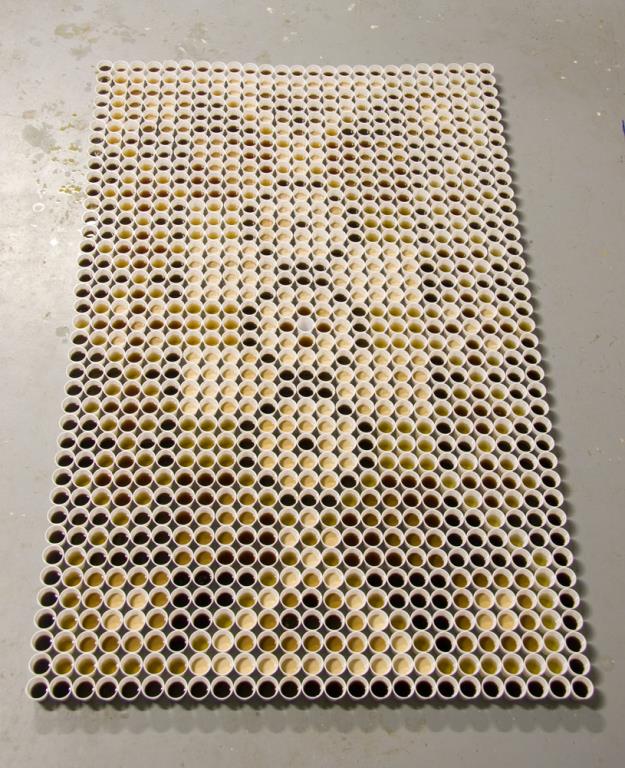
Coffee Cups
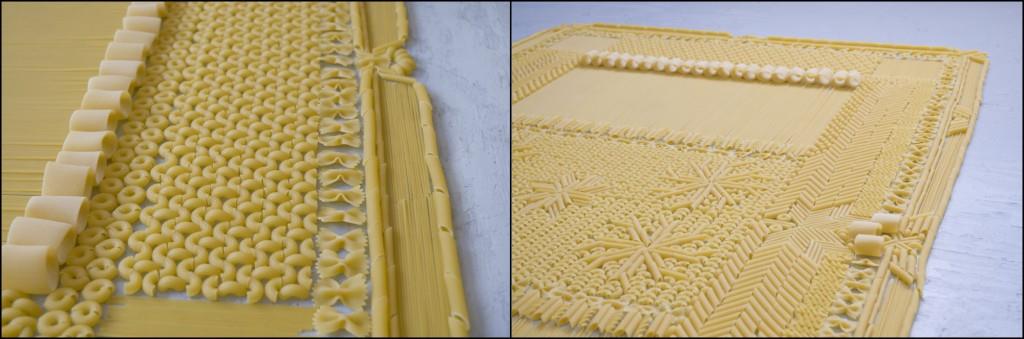
Pasta
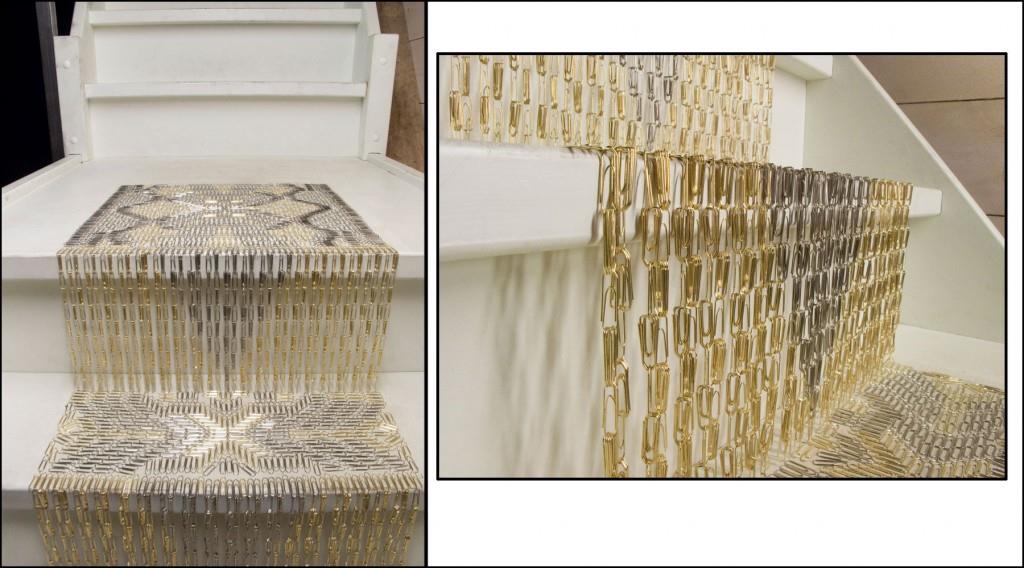
Gold and Silver Paper Clips
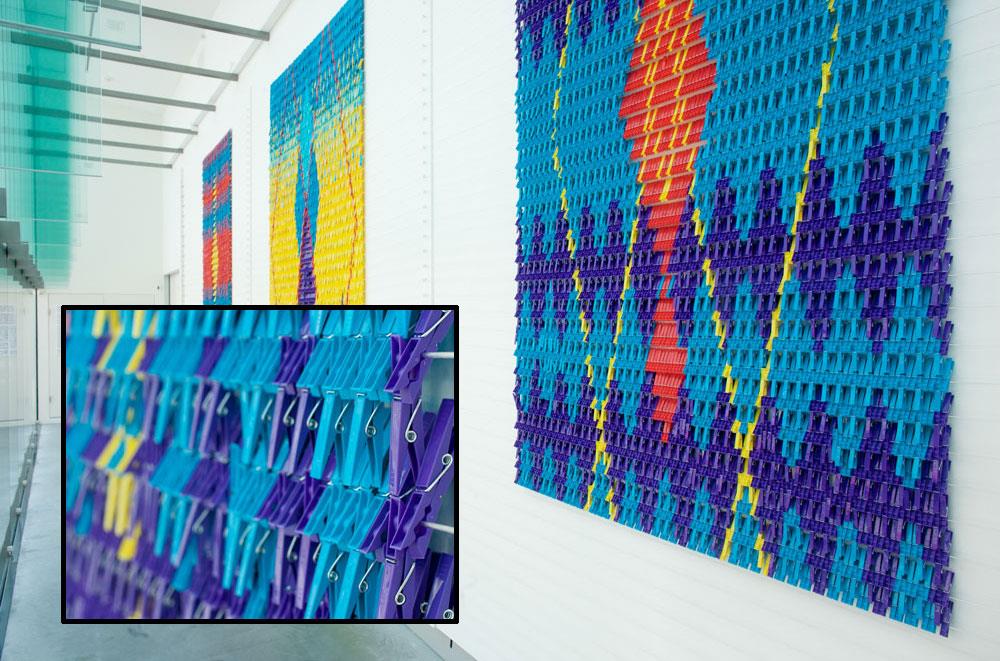
Pegs

bottle carpet
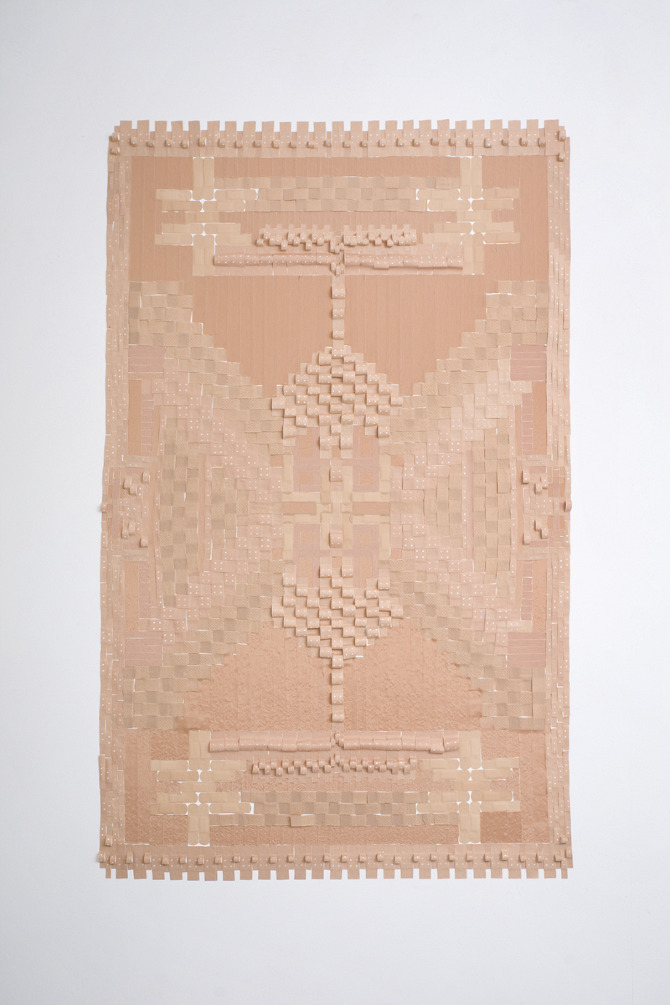
Band Aids

How doe shanging on the wall chang the carpet form....make it less of a carpet and mor eof a painting, more about the materials highlighting its fragility as the artist is taking away the viewer's option to walk over the carpet...if the carpet was on the ground it may also highlight this quality as the viewer's may choose not to walk over it incase it breaks..
I need to consider the materials I am using and how I want the viewer to experience their presence in the room. I have chosen the floor as the wool I am using is very delicate and the viewer will be forced to move around it and view it form above. I need to see in the cirtique how this will be read in terms of my relationship and interest in referencing carpets, craft and rugs.

No comments:
Post a Comment