Monday, 25 March 2013

New Artists:

Kari Steihaug & Tina JonsbuNeverending Story” at NOoSPHERE, New York

Kari Steihaug, After the Market, 2011. Unraveling wool clothes, knitted image after the painting The Gleaners (1857) by Jean‐François Millet.

  • using already found materials eg unraveling old woolen jumpers, blankets, rugs
  • garments have already been made from loose, chaotic reels of wool and constructed into something ordered, controlled and useful.
  • I want to try putting these materials through that same prcess again..unrareling..then reconstructing an image.

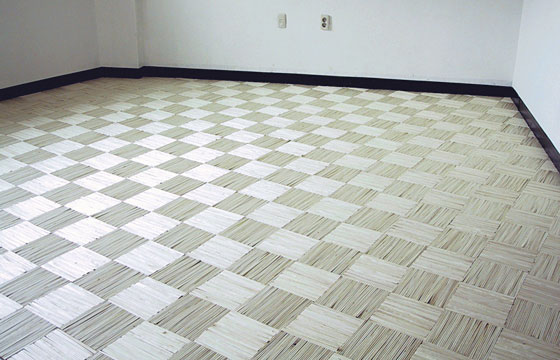
Jean Shin:  CONTROL AND ORDER

                                        Jean Shin Wooden Floor 2002 (take-out chopsticks)

http://www.jeanshin.com/unraveling.htm - detail of her work made from woolen jumpers

                                          Unraveling, 2006-09


A little somthing I made for the boy I babysit :)


Thursday, 21 March 2013

New interesting images found by Jenny:

 
                                                   (thread wrapped bricks, Anthropologie
 

Wednesday, 20 March 2013

First yr 3 critique with Ian Jervis:

Notes taken from the critique: 
  • vibrant, happy
  • meaning of vibrant:
    a. Pulsing or throbbing with energy or activity: the vibrant streets of a big city.
    b. Vigorous, lively, and vital: "a vibrant group that challenged the . . . system" (Philip Taubman).
    2. Exhibiting or characterized by rapid, rhythmic movement back and forth or to and fro; vibrating.
    3. Produced as a result of vibration; resonant or resounding: vibrant voices.
    4. Relatively high on the scale of brightness: a vibrant hue.

  • stand out on the white wall (could add colour to the wall)

  • change, motion, rhythm, repetition, intensity

  • draws the viewer's attention

  • loud

  • sensation - the colours interact, there is no focus point but rather they have equal intensity and the eye cannot rest.

  • Beauty and order, beauty is the form of order, it is predictable, harmonious - bhut you do not want it to be so beautiful it is anasthetic rather than aesthetic and puts you to sleep...there needs to be some excitement, somthing dangerous and uncomfortable to look at
  • energy comes form the intense colour - how this colour works for me
  • Fluorescent colour - luminosity...fluorescent colours produce light, and excites and energises light, whereas most colours reflect light and absorb wave lengths.
  • Think about light being in the work and coming out of the work, rather than just on the work - the light can bounce off the surface.
  • controlled chaos - after time the eye can find somewhere to rest.
  • there is potential in the fibre
  • Gerhard Richter: think in terms of his use of colours - he only uses 256 colours - I could an choose if the choice of colours matters to me or the number of colours I choose ...
ARTIST: Janet Cardiff

http://www.youtube.com/watch?v=W0_FQ6FER74 - 40 Part Motet by Janet Cardiff (Venice Architectural Biennale 2010)

http://wag.ca/art/exhibitions/upcoming-exhibitions/display,exhibition/125/janet-cardiff-forty-part-motet - description

  • speakers around the room, 40 voices
  • in the middle the sound is uniform, balanced, and harmonious
  • when walking around the space the balance changes
  • at the start there is chaos and talking, then immediate silence, then the work starts
  • it operates in unison, there is a harmony and a sense of collaboration.
  • when walking aorund the room you can her individual voices as you get close to different speakers etc
  • these ideas appear in my work where there is harmony, unison, collaboration in the controlled lines and patterns of the wool, but when you reach the edges there is a roughness and a sense of each componant straying from the balance and control in the centre of the work...
  • my next work will expand on these ideas, highlighting the control and rhythm found in the centre of the focus points and continuing the wool onto other works to show a sense of imbalance and chaos between works that ecentually reaches a place of rhythm and harmony together in the next focus point....

Now to create this work I need to research better materials that will allow me to escape the confines of one work and link up a numbe rof works using the wool.


(Controlled Chaos, wool, on OHP, coloured sticks)
 
(Untitled, wool, OHP,)
 
(Untitled, wool, OHP)
 
(Untitle, wool, OHP)
 
(Untitled, wool, OHP, coloured sticks)
 
Note to self!! practice titling my works!!!


Tuesday, 19 March 2013

Artist: Anne Wilson

I have become particularly inteterested in her different takes on her performance piece "Wind Up: Walking the Warp"


  1. Anne Wilson, Wind-Up: Walking the Warp, 2008, A video documentation by Jeroen Nelemans (7:09 min)
    A collaborative performance at Rhona Hoffman Gallery, Chicago, January 2008. http://www.annewilsonartist.com/windup-chicago-dvd.html
  2. Anne Wilson, Wind-Up: Walking the Warp Houston, 2010
    Video documentation by John Carrithers (6:35 min)
    A performance with the Hope Stone Dance ensemble at the Contemporary Arts Museum Houston
    http://www.annewilsonartist.com/windup-houston-dvd.html Wind-Up: Walking the Warp Houston was a two-part performance in conjunction with "Hand+Made." Wilson partnered with the local dance ensemble, Hope Stone Dance, to restage this conceptual choreographic work based upon weaving. The color and stripe pattern were a conjunction (or mashup textile) referencing hand-woven West African cloth and commercially woven French beach stripes. The fiber was all donated surplus from textile mills in the United States. After the second June 27 performance, the piece existed as a sculpture for the duration of the exhibition.
  3. Anne Wilson, Walking the Warp Manchester, 2012
    Video documentation by Jess Shaughnessy, iCity Media, Manchester (10:17 min)
    Whitworth Art Gallery, Manchester, England  http://www.annewilsonartist.com/performance-dvd.html Wilson’s movement performance Walking the Warp Manchester was staged February 25, 2012, from 1-5 pm at the Whitworth Art Gallery in Manchester, England within the exhibition COTTON: Global Threads. Working with composer Shawn Decker, collaborating choreographer Bridget Fiske, 21 dancers from The Lowry Centre for Advanced Training in Dance, and textile students from Manchester Metropolitan University, Wilson choreographed accumulations of repetitive movements relating to the weaving process. The interaction of bodies in space metaphorically becomes both a textile and a soft machine, responding to the deep histories of cloth production in northwest England. Performing labor as a meditation on the complex subject of textile production today is a critical foundation of this work.
Rhythm and order:
  • The main points that I am interested in these performances is the rhythmic process that the actors are going through to create a work that Wilson herself has a visual of image in her head. There is a systema nd an order to their actions to ensure that this work is executed properly to produce a desired outcome.
  • Each work is different in its entirety, approaching this idea of weaving in a slightly different manner. I am interested to see that although they are all different there is still clearly and order to the performance and a rhythm that they are all in time with each other.


Interesting artist: Omar Chacon

This website talks about his art practice and his influences:

http://www.juxtapoz.com/current/the-colorful-layers-of-omar-chacon

"His most recent body of work continues to be influenced by the intricate patterns and weavings found in the traditional folk art of South American indigenous peoples."

                                                                 Untitled, Omar Chacon


                                                Omar Chacón - Asiatica. Original 2005.

http://mocoloco.com/art/archives/003025.php

"Omar Chacon’s paintings are deceptive and can be considered sculptural in that he builds them up using pieces of paint as the compositional elements. What appear to be organized brushstrokes of stripes of paint are carefully applied decals of dried paint from previously conceived brushstrokes or drips. While most often Chacon’s works are expressions of sheer colourful and textural exuberance, some of them depict the artist’s interpretations of various flags or countries"

  • Some of the influences on Omar's works intrigue me, such as his interest in the intricate patterns and weavings of traditional folk art of South American Folk art. - I can see that it has had a significant influence on his use of colour and pattern
https://www.artexperiencenyc.com/omar-chacon-bacanales/

"Chacon is developing a very suggestive body of work, which is evocative of his cultural background in Colombia. He has mentioned the similarities between his pieces and textile patterns used in traditional craftwork from his homeland. His grandfather’s art became an inspiration for him1. Chacon, like many Latin- American avant-garde artists from the first half of the 20th Century, has found ways of integrating the Latin American cultural heritage into the rather universal language of abstraction."

"Even if Chacon avoids symmetry and geometric dispositions, giving room for spontaneity and improvisation, the artwork keeps an ornamental function, and a sense of rhythm which is replicated in the titles of his pieces: Bacananales, Bacan, Bacanerias, and Bacanismo. (The word ‘bacan’ has several regional meanings in Latin American countries, but generally speaking it refers to something, or someone, who is nice, tasty, fun, and delicious.)"

"In Omar Chacón Serves Up His Own “Sancocho” to the Art World (unedited), Alya Poplawsky describes Chacon’s way of producing his works:
His artistic process evolved from his grandfather’s simple dot paintings, and developed a migratory element in which paint transferred from one surface to another. He would peel off the left over paint on the plastic he would use to protect parts of the canvas, and then use these “leftovers” to create a whole new work of art. Now his works consist entirely of these “leftover” paint drippings, which he designs either as discs, patches, or lines."

Wednesday, 13 March 2013

Wool works: (Untitled, wool, craft glue, thick OHP)


Decision making....
 1) keeping the extended strands around the works to show the works are more about the material and the methodical/ logical process.
2) intuitive decision making on different colour combinations
3) how to present the works...pinned on the wall, lying on a table/ on the floor... 
(Polly Apfelbaum, "Feely Feelies Feeley," 2010, various materials and sizes - Plasticine and non-drying clay. "Not Extractions, but Abstractions, Part II" at Clifton Benevento )
 
4) Question...Do I want to be referring to the craft of weaving as much as my works currently are?...I am very interested in the hand making the work and hand craft so I could embrace this idea and not worry about the connotations of their strong reference to weaving.


Focusing on colour relationships and the layering of wool to create images.

(untitled, ink pen, cartridge paper)

(untitled, ink pen, cartridge paper)
 
With these drawings I am trying to experiment with the accumulation of simple linear patterns. In the to[p one I have introduced some slight alterations to the rhythm of the pattern and this has created a work which is slightly off...I am not sure if these subtlties are what I may be interested in.


Tuesday, 12 March 2013

Talking with the lecturer (Simon)


  • Keeping my last years ideas in mind and I can even work with the same/ similar materials, but tackling these ideas in a different way/ pushing on to new ideas.
  • Choices - 1) colourful, textural, bold, patterned...or 2) subtle, fragile.....
  • accumulation of these materials
  • Letting the material make the image rather than me drawing with the material - still using linear patterns and grids....

                                             ( Untitled, wool, craft glue, on thick OHP)

  • experimenting with colours
  • making bold and subtle changes (colours blending into each other)
2013 Paint/Print

Looking back on the main points from last years works that I am still interested in and developing:


  • Logical and methodical approach to how I make works......to produce a desired outcome (even if I am not sure how it will turn out)
  • multiple layers of something fragile appears literally, physically, and metaphysically strong
  • The frame and image becoming interrelated - the frame is both the image and the support.
  • Stepping away from the confines of the frame
  • Creating delicate/subtle works - the components are easily missed as an individual, but appear strong and rigid once in a layered structure.
  • Responding to patterns found in the space, everyday patterns, and patterns from memory and past experiences.
  • Using simple materials and exposing their natural characteristics....discovering methods that bring about interesting material relationships.
  • The use of line and grids has an underlying reference to the warp and weft or weaving. I do not wish to focus on the idea of weaving but rather use it as a craft to generate conversation about my playful interaction and manipulation of these simple materials.

Experimenting with old works and materials to try and generate new ideas and think of a new way to tackle similar ideas and materials.


(last years PVA glue works with patterns made from nylon and cotton...I have cut them all up to create a mosaic and experiment more with the pattern rather than the idea of the glue..which I have moved on from)


Experimenting with different layouts and pattern combinations